Seat Belts, Harnesses & Safety Restraints
|
|
Seat Belts, Harnesses & Safety Restraints |
|
CHECKING SEAT BELTS
|
|
| A guide to inspecting seat belts to ensure effective performance & compliance with 'MoT' test standards. | |
|
Seat Belts save lives - If they
are in good condition!
|
|
|
In an accident
a seat belt becomes a life saver. But
wear & tear and abuse all cause the seat belt to deteriorate. | |
Loads in an accident can reduce the effectiveness of the belt. In a severe impact the seat belt loading is approximately equal to the weight of a three tonne elephant! After an accident, in all cases, the complete seat belt should be replaced. |
|
 |
|
|
Finding out that your seat belt does not protect you when you have an accident is too late! |
|
|
IT'S COMMON
SENSE: Regular checks are vital on the safety-related parts of a vehicle
like brakes and tyres - SEAT
BELTS ARE NO DIFFERENT.
The following check list was devised by vehicle safety specialists at RoSPA, and by Securon, for guidance. |
|
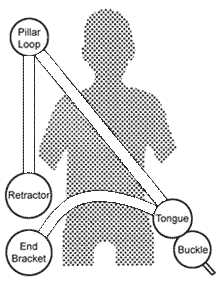 |
LOOK FOR THESE DANGER
SIGNS:
WEBBING
BUCKLE AND CONNECTION
TO THE VEHICLE RETRACTOR FITTINGS AND ADJUSTERS |
| Typical signs of wear & tear and abuse | ||
|
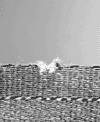
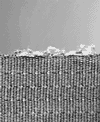
Fraying
& Fluffing
 |
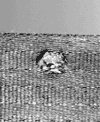
Holes
|
Cuts
or Nicks |
Damaged
Buckles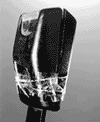
|
Weak
Connections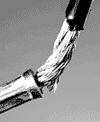
|
Poor
Retraction or Locking 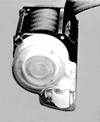
|
|
Users and Maintenance Instructions |
|
|
|
© SECURON 2019 |